Hybrid GQE-MTS and Transfer Learning for LABS Problem

Quantum Enhanced & GPU Accelerated Workflow

NVIDIA iQuHACK 2026 Team QAT

The Team

Hatice Boyar İlayda Dilek Leo Chang Hüseyin Umut Işık Eren Aslan

Use Arrow Keys or Buttons to Navigate

Presentation Outline

01

MTS & Quantum CD

Tabu Search & Counter-Adiabatic Driving

02

GQE-MTS

GQE, Transfer Learning & Hybrid Arch

03

Impact

Benchmarks & Live Demo

1. LABS Symmetry & Problem Definition

The Low Autocorrelation Binary Sequences (LABS) problem seeks a sequence (+1, -1) minimizing autocorrelation energy.

Interactive Symmetry Playground
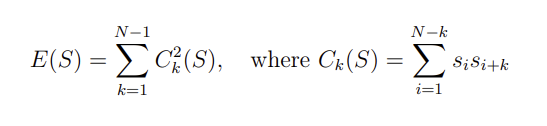
LABS Energy Function
Energy: 0

2. Head-to-Head: Classical vs. Quantum

Compare the standard Tabu Search (Local Minima Prone) against the Quantum Enhanced solver (Global Search).

Classical MTS

Exercise 6

3. Detailed Benchmark Analysis

Performance scaling and energy metrics from system validation.

Exponential Acceleration: The GPU solver achieves an 123x speedup at N=16, demonstrating near-linear scaling compared to the CPU's exponential growth.

3. Hybrid Workflow Strategy

Quantum Seed (CUDA-Q)
↓ Seeds
Classical MTS (GPU Accelerated)
↓ Refines
Optimal LABS Sequence

4. Project GQE-MTS: Product Requirements

Hybrid Generative Quantum-Enhanced Memetic Tabu Search (Team QAT)

Define N=10
Generate G2, G4
Operator Pool
Transformer
Quantum Circuit
Converged?
Optimal Ansatz ✓
(No)
Select Operators
Calc ⟨H⟩
Update Gradient

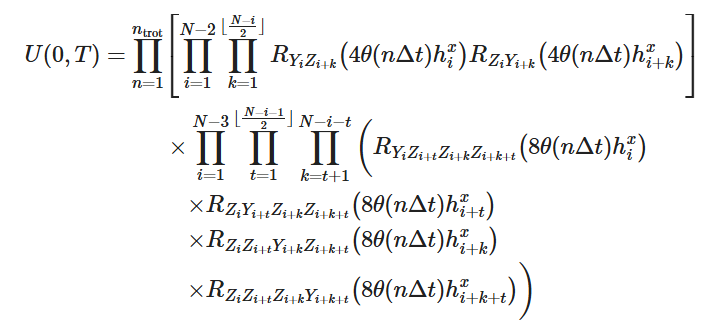
Ansatz (Translational Invariant):

Ansatz

5. The Challenge & Risk

Variational Algorithm

Two major drawbacks:

  • 1. Barren Plateaus:
    Gradients vanish exponentially (O(e-αN)), causing training to stall immediately.
  • 2. Gate Complexity:
    Requires a depth and gate count that exceeds the coherence time of current NISQ hardware.

GQE

  • 1. GQE Procedure:
    A generative model (Transformer) learns the "grammar" of optimal circuits from small examples.
  • 2. Translational Learning:
    We train on N=10 (simulation) and transfer the learned kernel to N=40 (QPU), bypassing the barren plateau.

6. GQE Pipeline Visualization

Define Small N
GQE
Choose the Operator
Translational Learning
Uniform coupling
Construct the bigger circuit
Measurement

7. The Proof: Translational Symmetry

Why does training on N=10 work for N=40? Because the physics is Translationally Invariant in the bulk.

N=10
Learned: Y_0 Z_1 Z_3
Tiling (Copy/Paste)
N=40
Y_0 Z_1 Z_3
Y_1 Z_2 Z_4
Y_2 Z_3 Z_5
...

Result: We construct a high-quality Ansatz for N=40 without ever training on N=40. This avoids the exponential cost (O(N3)) of large-scale optimization.

8. Final Architecture: Hybrid GQE-MTS

1. GQE Training (N=10) Learn optimal Y-operators (Geometric Kernels).
↓ Transfer (Tiling)
2. Ansatz Construction (N=MAX) Build full circuit using tiled kernels.
↓ Sampling (1000 Shots)
3. Basin Identification (Seeds) Select top 20 candidate sequences (Golden Seeds).
↓ Tabu Search
4. MTS Refinement Local search to find Ground Truth.

9. Benchmarking & Performance

Performance comparison across different Nvidia QPU configurations.

9b. Quantum Simulation Performance Benchmark

Runtime (seconds) vs qubit count N across NVIDIA backend configurations. Logarithmic scale highlights scaling from sub-second at small N to tens of seconds at N=30.

Configurations: nvidia (default), fp64, mgpu (multi-GPU), mqpu (multi-QPU). mgpu runs marked Failed at N=30 are omitted. MQPU and single-GPU scale to N=30.

10. Key Achievements

Novel GQE Application

First implementation of generative GQE for non-chemical combinatorial optimization.

HPC Scalability

Achieved massive parallelization using Multi-GPU (MQPU) acceleration on H100 clusters.

Transfer Learning

Solved the Transformer complexity bottleneck by exploiting translational symmetry and feature tiling.

Scale Advantage

Successfully scaled the problem size to N≥30, surpassing classical brute-force limits.

Full-Stack Platform

Developed a full-stack web platform for real-time visualization and user interaction.

11. Future Outlook

Target Sectors

  • Radar/Sonar Engineers: Pulse compression optimization.
  • 6G Telecoms: MIMO synchronization.
  • Quantum Researchers: NISQ algorithm benchmarking.

Upcoming Apps

  • 6G/MIMO: Pilot sequence generation.
  • Material Science: Crystal lattice energy.
  • Finance: Portfolio correlation analysis.

Next Steps

  • Hardware: Real QPU deployment (IonQ/IBM).
  • Algorithm: Graph Neural Networks (GNN).
  • Theory: Quantum Geometric Tensors.

🎓 Member Learning & Skill Acquisition

Our team didn't just build a pipeline; we evolved our technical approach to bridge the gap between AI-assisted development and rigorous scientific engineering.

1. Eren Aslan (Architect)

  • Strategic Orchestration: Learned to manage a "Sandwich" workflow.
  • Integrity Management: Mastered the balance between utilizing AI-generated templates for speed and performing manual hand-checks to preserve architectural integrity.

2. Chang Jen Yu (Quantum Engineer)

  • GQE Implementation: Acquired deep expertise in implementing Generative Quantum Eigensolvers (GQE).
  • Hallucination Mitigation: Learned to design physics-aware operator pools specifically to counteract and avoid non-physical hallucinations proposed by AI agents.

3. Hüseyin Umut Işık (HPC Developer)

  • Quantum Scaling: Learned to leverage the full power of CUDA-Q 0.13.0.
  • Parallel Infrastructure: Mastered MPI decomposition techniques to scale complex quantum simulations across distributed multi-GPU backends for large-scale problem instances.

4. Hatice Boyar (Optimization Specialist)

  • Complexity Reduction: Discovered the methodology for reducing computational complexity from O(N²) to O(N).
  • Guided AI Development: Learned how to effectively guide AI to implement specialized Delta-Evaluation logic for high-speed energy calculations.

5. İlayda Dilek (Quality Assurance)

  • Rigorous Validation: Learned to enforce strict "Calibration Gates" within the development pipeline.
  • Error Prevention: Mastered the use of symmetry invariants within automated test suites to identify and correct logic errors before they could scale to production runs.